MACSMIN 2025: Mathematics and Computer Science for Materials Innovation
 |
The MACSMIN logo includes the basic examples of the rock-salt cubic crystal, the benzene ring, and a blue wave containing a local maximum and a local minimum. |
- Dates: 8-12 September 2025 in a hybrid form in the Materials Innovation Factory, Liverpool, UK.
- MACSMIN 2025 is a satellite of the 35th European Crystallographic Meeting, Poznan, Poland.
- Conference organizers: Vitaliy's Data Science group including Olga Anosova, Dan Widdowson, Will Jeffcott, Yury Elkin, and Jonathan (Teddy) McManus. The registration was free by e-mail.
- See the timetable below. The tutorials on 9.9.2025 presented the latest advances in Geometric Data Science for crystals (Dan Widdowson), proteins (Olga Anosova), and molecules (Yury Elkin).
- The sessions on 8-10 September were in person, all talks on 11-12 September were on zoom.
- The conference was funded by the LMS through the network Applied Geometry and Topology.
- Travel information for Liverpool (UK): venue, accommodation, trains, and flights.
- Related meetings: mini-symposium Computational Data Science of Nanostructures (6 hours) at the SIAM annual meeting on July 28 - August 1, 2025 in Montreal: part 1, part 2, part 3.
- The AMS session on Open Problems in Geometric Data Science at JMM 2026, Washington DC.
- The ICERM workshop Rigidity Theory meets Geometric Data Science for applications in chemistry and biology on 6-10 July 2026, Brown University, Providence (US).
- The regular MIF++ seminar is a continuous version of the annual MACSMIN.
- Past meetings of the MACSMIN series: 2024, 2023, 2022, 2021, 2020.
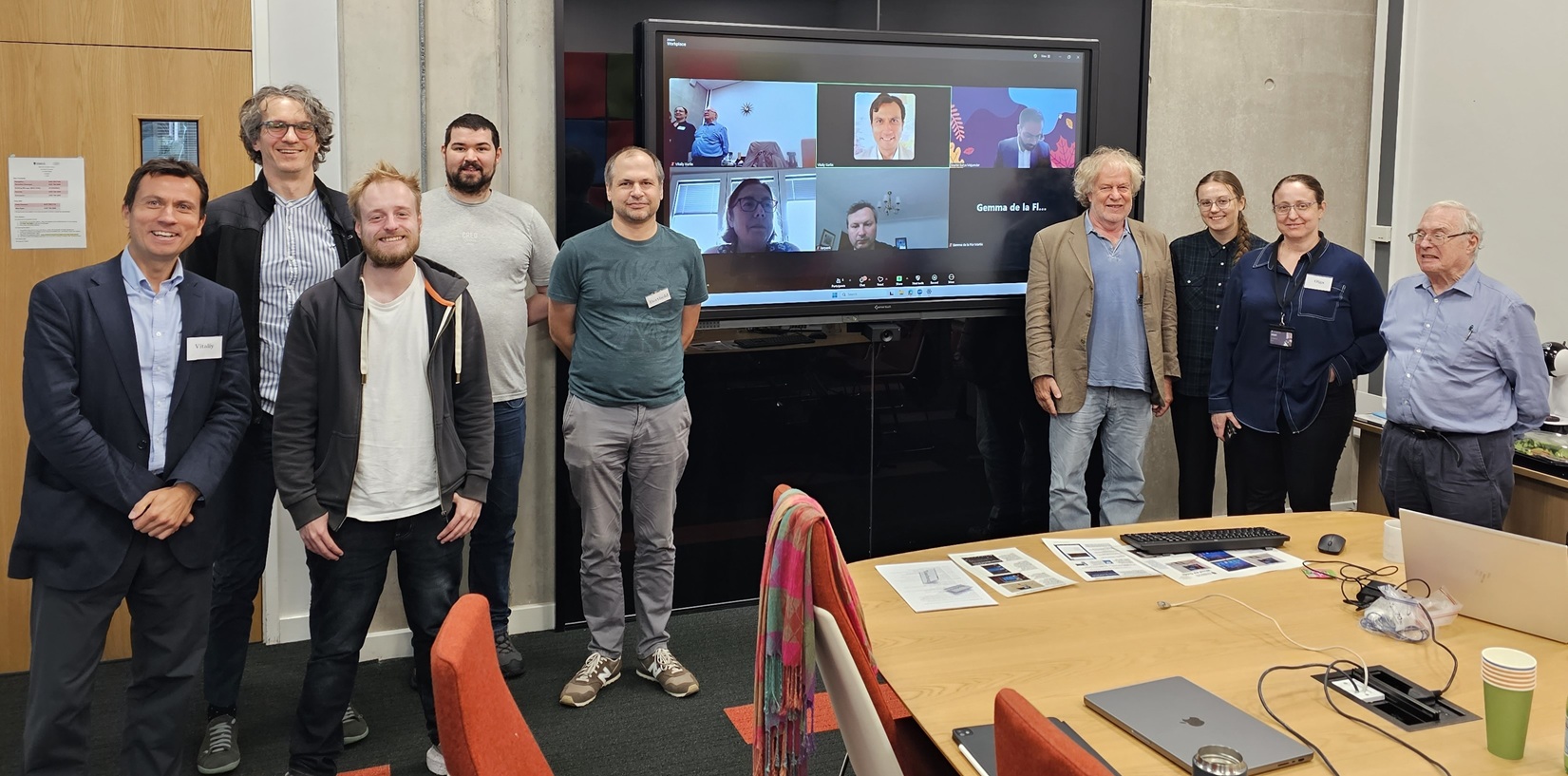 From left to right:
Vitaliy Kurlin,
Miloslav Torda,
Dan Widdowson,
Jonathan MacManus,
Berthold Stöger (Vienna),
online participants,
Janos Pach (Budapest),
Tatiana Kurlina,
Olga Anosova,
Mike Glazer (Oxford).
From left to right:
Vitaliy Kurlin,
Miloslav Torda,
Dan Widdowson,
Jonathan MacManus,
Berthold Stöger (Vienna),
online participants,
Janos Pach (Budapest),
Tatiana Kurlina,
Olga Anosova,
Mike Glazer (Oxford).
Timetable (all UK times) Monday Tuesday Wednesday Thursday Friday
Monday 8th September (on zoom and in person in the MIF boardroom)
- 08.45-09.00 Opening, history, and vision of MACSMIN by Vitaliy Kurlin (Liverpool MIF, UK)
- 09.00-09.50 Janos Pach (Rényi Institute, Budapest and EPFL, Lausanne) Video (51 min)
- Title. Mysteries about crossing numbers.
- Abstract. For any graph G, the crossing number cr(G) of G is defined as the smallest number k such that G can be drawn in the plane with k crossing points between its edges. The pairwise crossing number pair-cr(G) of G is defined in a similar way, except that in this case we want to minimize the number of crossing pairs of edges. Obviously, pair-cr(G) is at most cr(G). It is one of the most annoying unsolved problems for graph embeddings whether there exists a graph for which these two parameters do not coincide. Since computing these parameters are NP-complete problems, it is difficult to test the inequality even for small graphs. After giving a whirlwind survey of the topic, we discuss some recent developments.
- 10.00-10.50 Isaac Sugden (Cambridge Crystallographic Data Centre, UK)
- Title. Making use of the Cambridge Structural Database (CSD) to study Metal-Organic complexes.
- Abstract. This talk describes strategies and tools available for studying, analysing and assessing Metal-Organic complex crystal structures using the CCDC software suite. They place interactions and periodic elements in the context of the entire CSD, assigning structural descriptors, including: Topology and dimensionality, Coordination information, Metal steric descriptors (for example cone angles), Semiconductor calculated fields and Aromatic interactions. The entire suite allows a crystallographer to conduct an "inorganic health check" of a given structure, relating said structure to property.
- 12.00-14.00 lunch break
- 14.00-14.50 Graeme Day (University of Southampton, UK) Video (46 min)
- Title. Predictive crystallography at scale: learning from an unprecedentedly large collection of crystal structure prediction landscapes.
- Abstract. The talk will discuss the results of scaling crystal structure prediction calculations to over 1000 molecules [1], in an effort at validating global lattice energy minimisation for crystal structure prediction and creating high quality date for learning relationships between molecular structure, crystal structure and properties. I will discuss assessment of the dataset, insights that the data provides on crystallisation behaviour and our future outlook for how such a dataset will be valuable for machine learning methods applied to molecular organic crystals.
[1] Taylor, Butler and Day, Faraday Discussions, 2025,256, 434-458.
- 15.00-15.50 Erica Flapan (Pomona College, US) Video (55 min)
- Title. Topological complexity in protein structures.
- Abstract. For DNA molecules, topological complexity occurs exclusively as the result of knotting or linking of the polynucleotide backbone. By contrast, while knots and links have been found within the polypeptide backbones of some protein structures, non-planarity can also result from the connectivity between a polypeptide chain and inter- and intra-chain linking via cofactors and disulfide bonds. In this talk, we explore knots, links, and non-planar graphs that have been identified in protein structures and present mathematical models explaining how protein knots might occur.
- 16.00-16.50 Paweł Rubach (Warsaw School of Economics, Poland) Video (56 min)
- Title. Identification of Non-trivial Topologies in Biopolymers.
- Abstract. The topology of biopolymers plays a crucial role in their function and properties. In particular, the effect of knots, slipknots, and links in linear polymers was studied in designed compounds and proteins. The inclusion of branching points showed the existence of the theta-curve topology, lasso motif or cysteine knots, where the depth of the piercing affects the properties of the polymer. To efficiently identify these non-trivial topologies we created the Topoly Python package. Topoly enables the distinguishing of knots, slipknots, links, and spatial graphs through the calculation of different polynomials. It also enables one to create the minimal spanning surface on a given loop e.g., to detect a lasso motif or to generate random closed polymers. It is capable of reading various file formats, including CIF and PDB. The extensive documentation along with test cases and the simplicity of the Python programming language makes it a very simple to use, yet powerful tool, suitable even for inexperienced users.
Back to Timetable | Back to Top of this page
Tuesday 9th September (on zoom and in person in the MIF boardroom)
- 09.00-09.50 Yury Elkin (University of Liverpool, UK)
- Title. Complete invariants of molecular graphs with continuous metrics in polynomial time.
- Abstract. Geometric graphs are graphs with unordered vertices and straight-line edges embedded in a Euclidean space. These graphs represent many real structures including molecular graphs whose rigid shapes (equivalence classes under Euclidean motion) determine their chemical properties. Atomic vibrations and experimental noise motivate developing invariant descriptors that are preserved under any rigid motion (a composition of translations and rotations) and continuously change under perturbations of vertices. We developed a complete invariant that can be inverted back to a geometric graph, uniquely under rigid motion, and has a Lipschitz continuous metric satisfying all axioms. For a fixed dimension, the invariant and metric are computable in a polynomial time of the number of unordered vertices and hence avoiding exponentially many permutations. The new invariant distinguishes all chemically different molecules in big databases QM9 and GEOM of 130K+ and 31M+ conformations, respectively, within a few hours on a modest computer.
- 10.00-10.50 Olga Anosova (University of Liverpool, UK) Video (46 min)
- Title. A classification of protein backbones by complete and bi-continuous invariants in linear time.
- Abstract. Proteins are large biomolecules that regulate all living organisms and consist of one or several chains. The primary structure of a protein chain is a sequence of amino acid residues whose three main atoms (alpha-carbon, nitrogen, and carbonyl carbon) form a protein backbone. The tertiary structure of a protein chain is a geometric graph represented by atomic positions in 3-dimensional space. Because different geometric graphs often have distinct functional properties, it is important to continuously quantify differences in rigid graphs of protein backbones. Unfortunately, many widely used similarities of proteins fail the axioms of a metric and discontinuously change under tiny perturbations of atoms. This work develops a complete invariant that identifies any protein backbone in 3-dimensional space, uniquely under rigid motion. This invariant is Lipschitz bi-continuous in the sense that it changes up to a constant multiple of a maximum perturbation of atoms, and vice versa. The new invariant detected thousands of (near-)duplicates in the Protein Data Bank, whose presence skews machine learning predictions. The talk is based on the paper in MATCH 2025.
- 11.00-11.25 William Jeffcott (University of Liverpool, UK) Video (25 min)
- Title. Quantifying Geometric Variability and Atom Clashes in Protein Structures Using The Protein Data Bank.
- Abstract. In contrast to invariant-based descriptors such as the Backbone Rigid Invariant (BRI), which capture geometry preserved under rigid motion but are abstract, the variability of more familiar structural parameters such as bond lengths, bond angles and backbone torsion angles offers a complementary perspective on protein quality and plausibility. In this study, we present a large-scale statistical survey of bond lengths, bond angles, and torsion angles across Protein Data Bank (PDB) entries, benchmarking deviations against mean values and standard deviations for the entire PDB. We report the frequency of residues and chains exhibiting at least one parameter outside 3σ, 5σ, and 10σ thresholds, providing a quantitative landscape of geometric outliers. Special emphasis is placed on atomic clashes (bond lengths shorter than 1Å) which are physically impossible yet persist in both backbone and non-backbone regions. Our analysis reveals a surprisingly high incidence of such clashes, highlighting the need for enhanced validation protocols.
- 11.30-11.55 Jack Gallimore (University of Liverpool, UK) Video (17 min)
- Title. Geometry based method for identifying hydrogen bonds and classifying helices.
- Abstract. Understanding secondary structure in proteins is fundamental to structural biology, yet current algorithms such as DSSP rely on fixed geometric cutoffs and manually tuned heuristics, making them both opaque and discrete. We propose a geometry-based framework that identifies hydrogen bonding using statistically justified continuous regions in geometric space, without rigid thresholds. By analyzing millions of residues across 100,000 PDB structures, we define regions in the geometric distribution of interatomic distances and angles that correspond to hydrogen bonding. These regions, rather than fixed cutoffs, naturally reflect the spatial variation observed in experimental data and enable us to robustly detect secondary structure, particularly helices. This method offers a more interpretable and adaptable alternative for structural annotation, with the potential to unify the classification of helices, including 310 and π-helices.
- 12.00-14.00 lunch break
- 14.00-14.50 Vitaliy Kurlin (University of Liverpool, UK) Video (52 min)
- Title. Geometric Data Science established three principles of Atomic Geometry.
- Abstract. The Crystal Isometry Principle (CRISP, first presented at MACSMIN 2021) says that any real periodic crystal (under fixed ambient conditions) is uniquely determined by the geometry of only atomic centres without atomic types such as chemical elements, charges, etc. The CRISP confirms our physical intuition saying that changing an atomic type should inevitably perturb inter-atomic interactions and hence relative atomic positions, which was experimentally verified on the Cambridge Structural Database (NeurIPS 2022, CGD 2024) and later on other databases (IUCrJ 2024, SR 2025).
MACSMIN 2024 presented the Principle of Molecular Rigidity making a similar conclusion for individual molecules instead of materials: any (3D conformation of a) real molecule can be uniquely reconstructed with all atomic types from its cloud of only atomic centres under rigid motion. This conclusion required complete and continuous invariants of all finite clouds of unordered points in a Euclidean space (CVPR 2023) and was verified on the databases QM9 and PDB (MATCH 2025).
This talk will finalise the hierarchy of continuous invariants of crystals from the ultra-fast to complete with polynomial-time metrics (PR 2025) and will present the 3rd principle: the precise enough geometry of a real atomic neighbourhood based on a very few numerical invariants characterises any chemical element. The emerging area of Atomic Geometry provides continuous versions (geographic-style maps) of Mendeleev's table and aims to reduce chemistry problems to geometry.
- 15.00-15.50 Daniel Widdowson (Materials Innovation Factory, Liverpool, UK) Video (54 min)
- Title. Crystal Geomap: a visualisation & comparison tool for crystals.
- Abstract. The number of experimentally measured crystal structures has risen exponentially in recent decades. Crystals are often classified by space group, which can be the same for distinct structures and different for similar ones; yet most continuous descriptors such as density can coincide for dissimilar crystals (a false positive). The Pointwise Distance Distribution (PDD) is a continuous descriptor (isometry invariant) akin to a crystal’s genetic code with no false positives amongst real organic crystals. PDDs contain enough information to reconstruct most crystals while comparisons take only milliseconds and are fast enough to find all matches in a database of a million structures in a few minutes, a task requiring years for comparison tools such as COMPACK. In 2021 we used invariants to find duplicates in the Cambridge Structural Database (CSD), 5 of which were investigated by curators. Since then the experiment’s speed and scope have grown considerably, culminating in a list of over 380,000 cross-references between the CSD and COD (Open Crystallography Database), comprising 80% of the COD. The PDD of a crystal is considered its coordinate in a universal ‘crystal space’, motivating us to create a visualisation and comparison tool based on our invariants. Our ‘Crystal Geomap’ app allows a user to compare or cluster crystals, to export or plot on chosen x and y axes where all crystals are seen in one space with physically meaningful coordinates.
- 16.00-16.25 Jonathan McManus (University of Liverpool, UK)
- Title. Computing the bridge length: the key ingredient in a continuous isometry classification of periodic point sets.
- Abstract. The fundamental model of any periodic crystal is a periodic set of points at all atomic centres. Since crystal structures are determined in a rigid form, their strongest equivalence is rigid motion (composition of translations and rotations) or isometry (also including reflections). The recent classification of periodic point sets under rigid motion used a complete invariant isoset whose size essentially depends on the bridge length, defined as the minimum `jump' that suffices to connect any points in the given set. We propose a practical algorithm to compute the bridge length of any periodic point set given by a motif of points in a periodically translated unit cell. The algorithm has been tested on a large crystal dataset and is required for an efficient continuous classification of all periodic crystals. The exact computation of the bridge length is a key step to realising the inverse design of materials from new invariant values. The talk is based on the paper whose early draft is arxiv:2410.23288, see the latest pdf.
- 16.30-16.55 Tatiana Kurlina (University College London, UK)
- Title. Fast generation of billions of differently looking crystals.
- Abstract. A periodic crystal was traditionally represented by a Crystallographic Information File (CIF), which specifies a unit cell using lengths and angles, and a motif of atoms as fractional coordinates. However, every periodic crystal has infinitely many possible unit cells and motifs. Even if a cell is primitive (minimal by volume) or reduced to Niggli's form, almost any perturbation of atoms in an arbitrarily extended cell makes this larger cell primitive. Hence, it is unreliable to compare crystals only using cell and motifs CIFs without guarantees of continuity under noise. As a result, Google's GNoME and many experimental databases (IUCrJ 2024, PR 2025, SR 2025) accumulated thousands of near-duplicates. The talk will present a software to generate any number of near-duplicate crystals that all have very different CIFs. This demonstration motivates new mathematically justified methods of crystal comparisons based on continuous invariants.
- 18.00-20.00 conference dinner
 At the conference dinner from left to right:
Mike Glazer (Oxford),
Vitaliy Kurlin,
Dan Widdowson,
Jonathan MacManus,
Berthold Stöger (Vienna),
Miloslav Torda,
Jack Gallimore,
Janos Pach (Budapest),
Tatiana Kurlina,
Olga Anosova.
At the conference dinner from left to right:
Mike Glazer (Oxford),
Vitaliy Kurlin,
Dan Widdowson,
Jonathan MacManus,
Berthold Stöger (Vienna),
Miloslav Torda,
Jack Gallimore,
Janos Pach (Budapest),
Tatiana Kurlina,
Olga Anosova.
Back to Timetable | Back to Top of this page
Wednesday 10th September (on zoom and in person in the MIF boardroom)
- 09.00-09.50 Mike Glazer (Oxford University, UK)
- Title. Perovskite structures – a personal journey.
- Abstract. Perovskites are some of the most important crystalline materials because of their vast range of variations and properties. In this talk I shall review the history of structure determination and phase transitions of perovskite materials. This begins in the early 1940's, a time when there were hardly any publications on these materials and when perovskites such as barium titanate were considered to be strategic materials for the war effort. Since then, the amount of interest in the structures of perovskites and their related materials has become stratospheric, so much so that it is now impossible to keep up with the literature. It is clear that there is still a considerable future for research into these important structures, as new variations based on the crystal structures, and therefore their physical properties, are still being made.
- 10.00-10.50 Thérèse Malliavin (Université de Lorraine, CNRS, France)
- Title. Investigating a Local Approach for Calculating Protein Conformations.
- Abstract. Protein structure prediction is generally based on the use of local conformational information coupled with long- range distance restraints. Such restraints can be derived from the knowledge of a template structure or the analysis of protein sequence alignment in the framework of models arising from the physics of disordered systems. The accuracy of approaches based on sequence alignment, however, is limited in the case where the number of aligned sequences is small. Here, we derive protein conformations using only local conformations knowledge by means of the interval Branch-and-Prune algorithm. The computation efficiency is directly related to the knowledge of stereochemistry (bond angle and ω values) along the protein sequence and, in particular, to the variations of the torsion angle ω. The efficiency of predicting torsion angles ω is then evaluated for various pre-processing of input data-sets.
Reference: da Rocha W, Liberti L, Mucherino A, Malliavin TE. Influence of Stereochemistry in a Local Approach for Calculating Protein Conformations. J Chem Inf Model. 2024 Dec 9;64(23):8999-9008. doi: 10.1021/acs.jcim.4c01232
- 11.00-11.25 Miloslav Torda (Materials Innovation Factory, Liverpool, UK) Video (30 min)
- Title. From Molecular Shape to Crystal Symmetry: Densest Packings of Radially Equilateral Molecules.
- Abstract. The relationship between a molecule's intrinsic shape and the symmetry of its crystal form is a fundamental question in materials science. This work investigates this link by determining the maximum packing density of model radially equilateral molecules, defined as rigid collections of hard spheres. We first establish a foundation in two dimensions, where a hexagonal molecule exhibits two distinct chiral ground states connected by a single floppy mode.
Building on this, we extend our analysis to three dimensions, focusing on the cuboctahedral molecule. By leveraging the fibrifold (fibered orbifold) perspective on space-group symmetry and insights from the decomposition of the rectified cubic honeycomb into related tetrahedral and octahedral packings, we systematically identify six candidate closest-packed space groups. Subsequent computational experiments unambiguously identify the globally densest packing. These results provide a first-principles explanation for the prevalence of specific lattice symmetries observed in the Cambridge Structural Database, forging a direct and predictive link between molecular and crystal symmetry.
- 11.30-11.55 Surya Majumder (University of Liverpool, UK) Video (19 min)
- Title. Quantifying continuous asymmetry with isometry invariants.
- Abstract. Symmetry plays a central role in understanding the structure and properties of crystals. However, many crystals are not perfectly symmetric, and quantifying such deviations in a continuous way remains an open problem. In this work, we present a geometric approach to characterise this asymmetry using the Pointwise Deviation from Asymptotic (PDA), an isometry invariant that measures how much distances to atomic neighbours deviate from their asymptotic behaviour in periodic point sets. The resulting framework yields a real-valued, geometry-based measure of asymmetry that extends beyond classical crystallographic symmetry groups. We demonstrate the method on both experimental and predicted molecular crystals, particularly by highlighting regularities in experimental crystals that indicate potential synthesisability.
- 12.00-14.00 lunch break
- 14.00-14.50 Simon J. L. Billinge (Columbia University, US) Video (61 min)
- Title. When is a structure a new structure? Towards new measures of structural similarity.
- Abstract. For 100 years, since the development of x-ray crystallography, we have been able to study atomic structure. This knowledge is the foundation for much of our understanding of material properties. Despite these successes, challenges remain. I will describe some advances in AI/ML that are helping us take a completely new look at solving structure. As well as helping us solve conventional unsolved problems, these new methods are helping us to think about structure in new ways, causing us to ponder questions whose answers seemed hitherto obvious, such as "what is the structure of this material?", "when do two materials have the same structure and when do they have a different structure?", and "when is a defect a defect?". Many of these questions don't have good answers, but defining the problem is often a first step. In many cases, the problem is the problem, not the solution.
- 15.00-15.50 Xiaocheng Shang (University of Birmingham, UK) Video (46 min)
- Title. Stochastic Norton dynamics: An alternative approach for the computation of transport coefficients in dissipative particle dynamics.
- Abstract. We study a novel alternative approach for the computation of transport coefficients at mesoscales. While standard nonequilibrium molecular dynamics (NEMD) approaches fix the forcing and measure the average induced flux in the system driven out of equilibrium, the so-called “stochastic Norton dynamics” instead fixes the value of the flux and measures the average magnitude of the forcing needed to induce it. We extend recent results obtained in Langevin dynamics to consider the generalisation of the stochastic Norton dynamics in the popular dissipative particle dynamics (DPD) at mesoscales, important for a wide range of complex fluids and soft matter applications. We demonstrate that the responses profiles for both the NEMD and stochastic Norton dynamics approaches coincide in both linear and nonlinear regimes, indicating that the stochastic Norton dynamics can indeed act as an alternative approach for the computation of transport coefficients, including the mobility and the shear viscosity, as the NEMD dynamics. In addition, based on the linear response of the DPD system with small perturbations, we derive a closed-form expression for the shear viscosity, and numerically validate its effectiveness with various types of external forces. Moreover, our numerical experiments demonstrate that the stochastic Norton dynamics approach clearly outperforms the NEMD dynamics in controlling the asymptotic variance, a key metric to measure the associated computational costs, particularly in the high friction limit.
- 16.00-16.50 Andrey Ustyuzhanin (Constructor University, Germany) Video (27 min)
- Title. Accelerating Superionic Conductor Discovery with Machine-Learned Potential Energy Landscapes.
- Abstract. Solid-state batteries rely on superionic conductors, but the discovery of new candidates is hindered by the cost of first-principles simulations and the limited generalization of machine-learned interatomic potentials (ML-IAPs) when applied to diverse structures. We introduce a fast and reliable screening pipeline that extracts heuristic descriptors from the potential energy landscape generated by universal ML-IAPs. These descriptors capture key correlations between structural free volumes, percolation barriers, and ionic mobility while avoiding costly molecular dynamics. Applied to over a thousand lithium-containing compounds from the Materials Project, our method identified several promising solid-state electrolytes. Ab initio validation confirmed that eight of the top ten ranked materials exhibit superionic conductivity at room temperature, including LiB3H8 with exceptional performance (≈82 mS/cm at 363 K). This approach accelerates superionic materials discovery by achieving speedups of up to 3000x compared to conventional AIMD, opening avenues for scalable exploration of both lithium and sodium solid electrolytes.
Back to Timetable | Back to Top of this page
Thursday 11th September (only on zoom)
- 10.00-10.50 Gemma de la Flor (Karlsruher Institute of Technology, Germany) Video (45 min)
- Title. Comparison of isopointal crystal structures using COMPSTRU.
- Abstract. A quantitative comparison of similar crystal structures is often convenient to cross-check different experimental and/or theoretical structural models of the same phase coming from different sources. It is also important for the identification of different phases with the same symmetry, and it is fundamental for the still open problem of the classification of structures into structure types. In most cases, even if the setting of its space group is fixed, there is more than one equivalent description for a given structure. The existence of various equivalent structure descriptions makes the comparison of different structural models a non-trivial task in general. To deal with it, the program COMPSTRU was developed, and is available at the Bilbao Crystallographic Server (www.cryst.ehu.es). The program measures the similarity between two structures having the same space-group symmetry with the same or different compositions. This method is based on the normalizers of space groups. While this approach is highly effective for structures with higher symmetry, it becomes more challenging in low-symmetry cases, particularly triclinic and monoclinic structures. In this talk, I will present the core procedure implemented in COMPSTRU and highlight specific difficulties that arise in the comparison of low-symmetry structures, supported by examples that illustrate both the strengths and the current limitations.
- 14.00-14.50 Marjorie Senechal (Smith College, US) Video (40 min)
- Title. Alan Mackay and the Local Theorem.
- Abstract. Alan Lindsay Mackay (1926 - 2025) is known to crystallographers for thinking - and working - outside the box they call the unit cell. To turn the subject inside out, he drew on his wide range of interests and expertise. In this talk we consider the (possible) influence of the mathematician B. N. Delone.
- 15.00-15.50 Greg McColm (University of South Florida, US) Video (46 min)
- Title. Using Category Theory to Describe Complex Structures.
- Abstract. Category theory is a branch of abstract algebra used to describe complex structures and systems in mathematics, science, and engineering. We present a brief and accessible introduction to some of the basics of the subject and show how they can be applied to describe complex crystal structures. Given a periodic graph or complex, a category can indicate how substructures can be embedded within it, and (“dually”) indicate the overall structure of the graph or complex. We go through some examples of real and hypothetical crystal structures.
- 16.00-16.50 Peter Olver (University of Minnesota, US) Video (45 min)
- Title. Reconstruction and signatures of 3D bodies.
- Abstract. I will present a solution to the reconstruction problem for three-dimensional bodies from their two-dimensional projections based on the method of envelopes. Then the induced action of the Euclidean group on the body's projected outlines is analyzed using moving frames, leading to a complete classification of the outline differential invariants and the associated outline signature of the body.
Back to Timetable | Back to Top of this page
Friday 12th September (only on zoom)
- 09.00-9.50 Fabio Pietrucci (Sorbonne Université, France) Video (42 min)
- Title. Exploring the structural landscape of materials with topology-based collective variables.
- Abstract. I will present a few similar approaches [1-4] aimed at exploring
(meta)stable structures of molecules, clusters or extended materials:
First, a suitable space of collective variables - invariant upon
permutation of identical atoms - is defined, starting from the matrix of
interatomic contacts (adjacency matrix). Second, biasing forces are
applied along such variables, within finite-temperature molecular
dynamics, to accelerate barrier crossing and explore in a reasonable
computer time many different structures. Of course, the collective
variables can also be employed to identify structures in a trajectory
obtained, e.g., by brute force. A key question in this field is: how
much information do we want to retain, when adopting some collective
variables, and how much do we want to neglect? Contrary to machine
learning force fields, for instance, here it is not optimal to resolve
each distinct topology (particularly in liquids and disordered solids).
I will present applications to different materials, from crystal
nucleation to amino acid synthesis and decomposition.
[1] F. Pietrucci and W. Andreoni, Phys. Rev. Lett. 107, 085504 (2011).
[2] F. Pietrucci, A.M. Saitta, Proc. Natl. Acad. Sci. U. S. A. 112, 15030 (2015).
[3] S. Pipolo, M. Salanne, G. Ferlat, S. Klotz, A.M. Saitta, F. Pietrucci, Phys. Rev. Lett. 119, 245701 (2017).
[4] A. France-Lanord, H. Vroylandt, M. Salanne, B. Rotenberg, A.M. Saitta, F. Pietrucci, J. Chem. Theory Comput. 20, 3069 (2024).
- 10.00-10.50 Sergei Grudinin (Grenoble Alpes University, France)
- Title. Crystal Structure Prediction with a Geometric Permutation-Invariant Loss Function.
- Abstract. Crystalline structure prediction remains an open challenge in materials design. Despite recent advances in computational materials science, accurately predicting the three-dimensional crystal structures of organic materials---an essential first step for designing materials with targeted properties---remains elusive. In our work, we address the problem of molecular assembly, where a set S of identical rigid molecules is packed to form a crystalline structure. Existing state-of-the-art models typically rely on computationally expensive, iterative flow-matching approaches. We propose a novel loss function that correctly captures key geometric molecular properties while maintaining permutation invariance over S. We achieve this via a differentiable linear assignment scheme based on the Sinkhorn algorithm. We show that even a single-step, direct regression using our method significantly outperforms more complex flow-matching approaches on the COD-Cluster17 benchmark, a curated subset of the Crystallography Open Database (COD).
- 13.00-13.50 Jason R. Hattrick-Simpers (University of Toronto, Acceleration Consortium and Vector Institute for AI)
- Title. Methods for Generating Unbiased and Robust A.I.’s for Autonomous Materials Discovery. Video (45 min)
- Abstract. Since the publication of the Mission Innovation Materials Acceleration Platform, AI is increasingly responsible for driving automated experimental and computational campaigns. There have been multiple case studies for which autonomy was demonstrated to successfully drive materials optimization or discovery and the world of scientific robots has moved from science fiction to reality. However, within the AI community, it is well understood that AI models carry the biases of their creators, which can have serious implications for model deployment. These models may behave unpredictably, even within the bounds of their training data. Using specific case studies, I will illustrate how such biases arise in materials science and outline steps to mitigate them, leading to more robust models. In particular, I will discuss our recent work on: (1) identifying and mitigating search space bias through model disagreement, (2) quantitatively demonstrating how little basis there is for our biases about dataset completeness, and (3) developing new metrics for evaluating model-data synergies. Finally, I will briefly touch on broader efforts in self-driving lab development within the University of Toronto’s Acceleration Consortium.
- 14.00-14.50 Alex Chernatynsky (Missouri University of Science and Technology, US)
- Title. A symmetry-oriented crystal structure prediction method for crystals with rigid bodies.
- Abstract. We have developed an efficient crystal structure prediction (CSP) method for desired chemical compositions, specifically suited for compounds featuring recurring molecules or rigid bodies. We applied this method to two metal chalcogenides: Li3PS4 and Na6Ge2Se6, treating PS4 as a tetrahedral rigid body and Ge2Se6 as an ethane-like dimer rigid body. Initial trials not only identified the experimentally observed structures of these compounds but also uncovered several novel phases, including a new stannite-type Li3PS4 structure and a potential stable structure for Na6Ge2Se6 that exhibits significantly lower energy than the observed phase, as evaluated by density functional theory calculations. We compared our results with those obtained using USPEX, a popular CSP package leveraging genetic algorithms. Both methods predicted the same lowest energy structures in both compounds. However, our method demonstrated better performance in predicting metastable structures. The method is implemented with Python code which is available at https://github.com/ColdSnaap/sgrcsp.git.
- 15.00-15.50 Shubham Sharma (Pfizer, US)
- Title. Polymorphism in drug development: From importance to computational insights.
- Abstract. Polymorphism – the ability of a molecule to crystallize in more than one form – has profound implications for the pharmaceutical industry, affecting properties such as stability, manufacturability, and drug performance. At Pfizer, recognizing and understanding polymorphism is vital to ensuring the quality and consistency of our medicines. This talk will highlight why polymorphism matters and its impact on pharmaceutical development. It will further provide a broad overview of computational techniques, including crystal structure prediction (CSP) and structural informatics, that can help assess and anticipate polymorphic risks. Employing some Pfizer case studies viz. MPO (PF-06282999) and Nirmatrelvir (PF-07321332), the talk will present some computational techniques employed for identifying subtle differences between polymorphs and their properties.
- 16.00-16.50 Andrea Darù (University of Chicago, US) Video (42 min)
- Title. Computational tools for the prediction and generation of novel reticular framework materials.
- Abstract. This talk will present recent work on the computational prediction of metal-organic and covalent organic frameworks (MOFs and COFs), with addition of experimental insights. I will focus on the study "Symmetry is the Key to the Design of Reticular Frameworks" (Adv. Mater., 10.1002/adma.202414617), which introduces a computational tool that predicts feasible reticular framework topologies based solely on the connectivity and symmetry of isolated nodes and linkers. Unlike high-throughput methods, this approach prioritizes accuracy by generating a small, targeted set of candidate structures, optimizing computational resources. The tool is at https://rationaldesign.pythonanywhere.com. The talk will conclude with experimental perspectives on the applicability of this method to known and unknown synthesizable structures.
Back to Timetable | Back to Top of this page
Travel information: venue, accommodation, trains, and flights
- All talks in person will be in the ground floor boardroom in the Materials Innovation Factory (MIF), Liverpool, UK. Address: 51 Oxford street, building 807 in the grid cell F5 on the campus map. The building has a secure entrance, so we will let the reception know about MACSMIN participants. The MIF is 15 min on foot from the Liverpool Lime Street station.
- If you contact us in advance, we can help with booking hotels. One option is the Liner hotel in a quiet street close to the Liverpool Lime Street main rail station. Explore other good hotels and attractions on the website visit Liverpool.
- The city has the Liverpool John Lennon airport with convenient buses to the centre. The larger Manchester airport has the train station with direct 90-min trains to the Liverpool Lime Street station. Check flights to nearby airports at Skyscanner.
Back to Top of this page | Back to MACSMIN | Back to Home page